Case Study #1: Farm to School
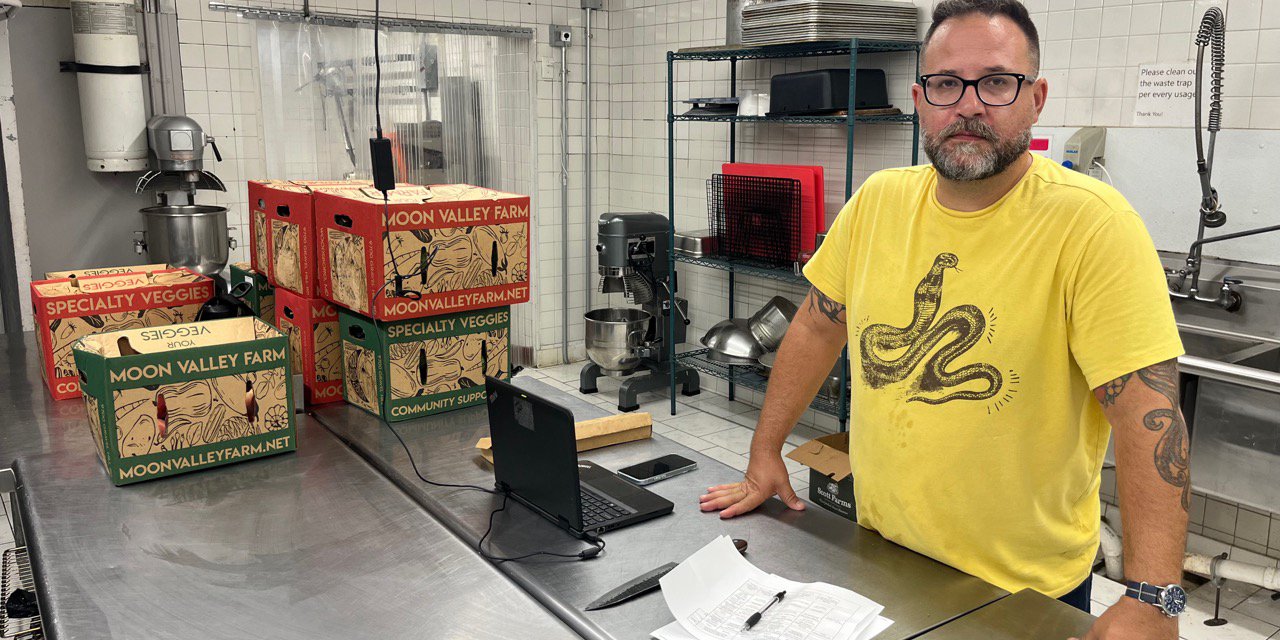
Why is it so difficult for farms to place and serve local, organic, fresh produce in nearby schools for breakfast and lunch? Can chef Ari Stern of Dinnerfix be the bridge?
Core Problem: Government agents are still incentivized to choose the cheapest option, both at the federal level, but especially in low-income, low tax bracket districts. Taxpayers often choose the cheapest option or pressure local politicians to do so. This is still the case for school lunch.
Funding problem: 1: Private citizens, i.e., those with means, float programs (in this case, locally sourced, nutritious school meals) for underserved communities with little expectation for ROI. Eventually, investments cease without clear models for perpetual sustainability. 2: Government grants, often pushed through new programs or non-profits, though helpful and valuable, are often one-time only injections of capital. Grant-writing requires awareness, time, skill, and labor.
By Kurt McVey
Columbia, Maryland, a “planned community” and “census-designated place” within Howard County, was designed and developed by the actor Edward Norton’s Grandfather, James Rouse, the businessman and real estate developer responsible for coining the term “Urban Renewal.”
After WW2, Rouse became involved in President Dwight D. Eisenhower’s National Housing Task Force, where he coined the enduring, aforementioned, now perhaps slightly stale term, which he then felt properly described the task force’s recommendations, including redevelopment of the neighboring but still very much beleaguered city of Baltimore, Maryland.
Aryeh (Ari) Stern was born and raised in Uptown New York City proper and culturally close to Jewish orthodoxy. He now lives with his wife Erica and two young boys in one of Columbia’s suburban hamlets in a perfectly humble, surprisingly spacious sun-lit ranch. Ari has another son, Zev, a high-functioning autistic teenager and Taekwondo red belt from a previous marriage living just north of Manhattan. Ari visits and talks with Zev frequently, where they discuss Zev’s nascent but growing YouTube channel, sometimes in Tom Hardy’s (or Bartley Gorman’s) “Bane voice” from the final Chris Nolan Batman film. Ari is a big-hearted, fast-talking, at times brash, tattooed chef with an even bigger personality. He can boast resume bullet points from past high-level kitchen positions at New York’s Jean George affiliates, the Lever House Restaurant, and the China Grill Group. He also co-founded and operated one of the more ground-breaking “art bars” in New York City, Culturefix, once voted by Complex magazine, the publication that produces the wildly popular Hot Ones YouTube talk show, as the best of its kind in America. It was an uncompromising original, like Ari himself. A large plastic novelty chair in the shape of a human hand, which lived in a small outdoor recess a few steps down from the NYC streets by Culturefix’s entrance, still spray painted a gritty, peeling, tooth-grill faux gold, sits in his suburban backyard. It’s speckled and glimmering with sweaty morning dew. Invisible walnuts are falling from trees, crashing down on deck railings and shed roofs in the background. A half inch of rain water collected in the palm, this old artifact retired with honors but perhaps too soon in 2015.
Ari the independent entrepreneur operates now as a food consultant, private chef, and “Farm-to-School” activist. He recently offered up, on the printed itinerary for a community “Buy Local” cookout organized earlier this year by Maryland’s optimistic new Governor, Wes Moore, that he draws his inspiration from “the bounty of the seasons and the flavors of his youth.” There’s some humor in this, as Stern still wears New York City’s attitude and concrete curtness on his sleeve with the aforementioned heart and tattoos, whether he’s picking his kids up from soccer practice or meeting with the Howard County Chief of Staff to make sure our kids eat well.
Ari now runs Dinnerfix, a callback to Culturefix and its legendary 5-year run from 2010-2015 on Manhattan’s Lower East Side. Skills were developed on Manhattan’s developing Clinton Street well beyond small plates and tapas, microbrews and accessibly priced contemporary art. It was a community hub and incubator for everyday neighbors and global creatives from all industries.
Acclaimed chef Wylie Dufresne’s WD-50 was right down the street serving once as an inspiration for experimentation, imagination, high-standards, and rigorous community engagement. Ari too exerted his fisher king mayorness on the block. He and the team at Culturefix understood that gallery outposts, or even small-plate, beer and wine food operations situated off the fairer beaten path are often precursors for gentrification. Great strides were made therefore to provide access to local and under-represented artists, including those working in the culinary arts. Though New York misses Ari Stern, Maryland needs him more.
Columbia, Maryland is officially part of the Baltimore metropolitan area and is an idyllic middle (hanging in there) to upper-middle class suburb consisting of ten self-contained villages. It’s populated mostly by the liberal-minded (Virginia draws most of the conservatives apparently, Ari’s wife Erica offered), and is situated between Washington D.C. and Baltimore, the latter being a city currently known less in the wider national and international consciousness for its historic Camden Yards ballpark and fresh crab cakes than for its relentless poverty, crime, gang violence, drug-use, low literacy rates, political corruption, hunger, and general urban decay.
In 2022, Wes Moore, now 44-years-old, won the Maryland gubernatorial election against Republican nominee Dan Cox to become Maryland's first Black governor. Moore is the third Black person elected as governor of any U.S. state, and as of 2023, he’s the only African-American incumbent governor of any U.S. state. Moore ran on the slogan “leave no one behind.” He took the oath of office on a Bible owned by abolitionist Frederick Douglass, as well as his grandfather's Bible. His commitment to his Farm to School initiative carries momentum from former First Lady Michelle Obama’s mission to fight obesity. The CDC currently claims obesity in the United States affects 100.1 million (41.9%) adults and 14.7 million (19.7%) children and accounts for approximately $147 billion in annual health care costs. Four in ten American adults have obesity, and obesity rates continue to climb nationwide and within population groups, according to a report State of Obesity 2022: Better Policies for a Healthier America released by Trust for America’s Health (TFAH). Black adults, as cited in this report, have the highest level of adult obesity at 49.9 percent. Earlier this year, the CDC announced the availability of fiscal year 2023 funds to implement CDC-RFA-DP-23-0013: The High Obesity Program (HOP 2023), which would address how poor diet and low levels of physical activity affect overall health and are significant risk factors for obesity and chronic disease.
Last summer, on June 30, 2022, the Biden Administration announced that the United States. Department of Agriculture (USDA) would be providing nearly $1 billion in additional funding to schools to support the purchase of American-grown foods for their meal programs.
“The Biden Administration knows that ongoing impacts of supply chain issues and rising food costs continue to be a challenge for many schools and child nutrition operators, and we are thankful for Congress stepping up to ease some of their burdens,” said Agriculture Secretary Tom Vilsack. “On our end, this funding boost is yet another step the Administration is taking to ensure every child who needs a meal, gets one. No matter the circumstances, USDA and all our partners must continue collaborating to provide our young ones with the healthy meals they count on.”
The Department of Agriculture’s website explains that the $943 million boost from the department is provided through USDA’s Commodity Credit Corporation. Funds must be distributed by state agencies to schools across the country so they can purchase domestically-grown foods for their meal programs. This assistance builds on the $1 billion in Supply Chain Assistance funds USDA previously allocated in December 2021, which states can use this school year as well as next to provide schools with funding for commodity purchases.
This is where things get murky, however. “State agencies'' is a wide and perhaps deliberately broad term. What Ari Stern and Dinnerfix have addressed or diagnosed rather, is that these funds are still largely being used to serve kids the cheapest, lowest common denominator food items, despite the sentiments from Maryland’s Governor and our sitting President, especially in hyper-low income cities like Baltimore. This is due to a lot of the same bad actors: entrenched, inefficient supply chains and delivery conduits, a lack of fresh and uncompromised procurement channels to allocate funds to local farms and participating schools and independent contractors like Stern, whose Dinnerfix acts and hopes to continue to act, with sufficient support to scale, as the worthy, concerned, and capable bridge between the farm and school. Ari is the broker and producer, as well as the manufacturer (washing, cutting, cleaning, portioning, packaging) of local farm products to individual schools and for wholesale distribution, and he’s ready to scale.
Ari and Dinnerfix have a small commissary, roughly 1,500 square feet in Northwest Baltimore, very much not in the Columbia suburbs. This nondescript building is where Ari’s “chef-mind” and “chef-hands,” are put into hard utilitarian action. All the food network zoom-in skills are on display here. On a recent Tuesday afternoon, one finds Ari receiving and cataloging inventory for the week. On Tuesdays, food for Wednesday through Friday is sent to partner schools. On Fridays, they deliver food for Monday and Tuesday and so on. It’s important for Dinnerfix and participating farms to harvest, manufacture and deliver food the very same week. This requires communicating openly with schools about how planned, on-menu sweet potatoes might switch in real time to prune plums depending on the yield. While Ari chops up fresh apples, adding to an already impressive knife blister hardened over by several sedimentary decades of ferociously fast dicing, Dinnerfix’s Director of Culinary Operations, Greg Harden finishes the product. This means getting it portioned out for schools or turned into another phase of apple, like super-fresh apple sauce for instance. Chopped carrots and kale radiate with calcium nearby.
Dinnerfix is a for-profit company at the moment, but remains open to shifting to non-profit status, as much of the “out of kitchen” actions involve liaising with the government or other non-profits, like Waverly Main Street, a 501(c)(3) not-for-profit organization dedicated to the commercial revitalization of the Greenmount Avenue commercial corridor in Baltimore. They support the Greenmount Collective, a membership program for sustainable DIY food operations and other small business initiatives. It was started by William Burgess, the current owner of Dinnerfix’s little commissary building-that-could, an unremarkable structure housing Ari’s remarkable, independently owned project. “Whatever is best to solve the central problem,” says Stern.
Though Dinnerfix has its hands in a lot of local pies, literally at times, its primary focus is on one client, Cradlerock Children’s Center in Columbia, a licensed and accredited, non-profit preschool and daycare serving nearly 100 families (the school has roughly 87 kids currently) with children ranging from 6-weeks-young to 5 years of age. The school’s passionate and steady Director, Amanda Morton, agreed to partner with Dinnerfix to launch a pilot program for farm-to-school food service and education. The program was funded entirely by Cradlerock Children’s Center. USDA offers $1.25 per student reimbursement based on the compliance with current standards. The program is successful, but it needs to scale in order to be sustainable. The money runs out at the end of 2023. While on location for this writing and reporting, Dinnerfix and Cradlerock were making urgent and polite appeals for grants and assistance directly to Howard County representatives.
Dinnerfix complies with all USDA regulations, and though Cradlerock is the ideal incubator considering its size, general tax bracket spectrum within a “Goldie Locks'' zone (not too rich, not too poor) and geographic location, it’s capable of serving any school at any size, no matter how they’re funded. Cradlerock is by no-means the inner-city, but the school and the families, guardians, and parents who send their kids there, are still conscious of where their money is going. Dinnerfix’s pilot program is not only successful and popular among kids, staff, and parents, it's literally life-changing in terms of overall health and educational awareness. This covers nutrition, human and animal biology, agriculture, meteorology, commerce, exercise, cooking, food safety, and much that can’t easily be quantified. However, without new funding for the next calendar year, or a good faith monthly stipend or credit line, the program will go into remission or disappear entirely, as working-class parents will likely be reluctant to shoulder the full financial burden and they shouldn't have to.
The third party in Cradlerock and Dinnerfix’s ongoing healthy partnership is Moon Valley Farm (MVF), their local farm and fresh produce provider. Before solidifying the partnership with Cradlerock, Ari reached out to MVF about purchasing CSA shares. CSA refers to Community Supported Agriculture, a production and marketing model whereby consumers buy shares of a farm's harvest in advance. These are not to be confused with Mutual Aid Shares, a program and process by which customers can help donate the fruits or surplus from the harvest to organizations in the region that give food to people in need. In nearby Westmoreland County, Virginia, Chris Newman, a Black and Indigenous farmer, runs Sylvanaqua farms, where he’s pushing a return to Indigenous modes of bartering goods and services to help close the space between the haves and have-nots. Dinnerfix does not work directly with Sylvanaqua farms, but Stern respects Newman’s practice and has looked at mutual aid shares as a potential funding model.
For Cradlerock’s Dinnerfix program, Ari receives weekly harvest reports from his primary local vendor, Moon Valley Farm-what’s available; what’s going to waste; what does it cost; what’s the most fresh, and so on. Since its inception, Ari has witnessed first-hand that children not only become accustomed to good, locally sourced fresh food, they demand it, and enjoy pontificating, critiquing, and exploring what's in season, swapping out 20th century wood block toys for red bell peppers. Children in turn develop standards and expectations regarding what’s palatable and truly healthy. They can spot a fake. A bad apple. This of course becomes a new foundation, not only for one’s own personal health-mental, physical and spiritual (see: Chris Newman’s Indigenous approach to lifestyle and the notion of food sovereignty), but a new prism through which to view the world and others. Nutrition is mental health.
The importance of celebrating, reinforcing, and firmly instituting this pilot program, as well as this broader underlying ideological and lifestyle foundation, is equally and monumentally vital to the micro (an individual child) and the macro (a healthy citizenry). Dinnerfix works, but the way it’s funded and fueled can be improved upon.
“I just want to take what grows here in the Delaware, Pennsylvania, Maryland, Virginia region and support those farmers by selling and producing what’s available,” says Stern, wiping his hands in a no-nonsense “that’s it” gesture. In January earlier this year, MVF produced a surplus of turnips. “Everyone told me kids wouldn’t eat turnips. So I made the kids small Japanese Hakurei turnips with fresh greens glazed in a Chinese-style sauce. That’s ginger, honey, soy sauce, garlic, and cooked very slowly. They devoured it! So simple to make. These are not your mom’s soviet-era boiled brussel sprouts that terrorized you as a child. We don’t do that here.”
Ari likes to use small “immersion circulators,” heating devices that are light and cheap and can heat up (steam) packaged fresh foods quickly, without smoke or using too much energy. When prepared by a guy who worked in incredible New York restaurants, veggies rock. The machines can fit nicely in the corner of a school’s kitchen. And if the school doesn’t have a kitchen, the immersion circulators can be utilized in a more mobile capacity. “A lot of these schools have different capabilities,” Stern notes. “A school with an oven can receive a semi-finished product, but a school with no oven can use these small heaters. They’re like a hundred dollars each.”
The pilot program by Dinnerfix at Cradlerock, one pre-school nestled within the Owen Brown Interfaith Center in Columbia, Maryland, costs $209,000 for the 2023 year. That’s two cups of different fruits or veggies, a half cup each, every day as minimum. The state, that is the USDA, still mandates kids drink milk. That’s whole milk if you’re under two-years-old and 2% milk if you’re over two. Ari says he’s not interested in taking on the milk lobby right now. Dinnerfix gets their milk from Harrisburg Dairies in Pennsylvania. They’re the only producers Ari could find that make five-gallon bags of milk. “Five gallons of milk has the same shelf-life as one gallon,” he gruffs. “It’s a huge expense. 300-400 dollars a week, just in milk.”
Ari previously worked for Aramark, a massive company on the Fortune 500 with thousands of employees worldwide. Aramark supplied food vendors at M&T Bank Stadium, where the Baltimore Ravens, the American NFL football team play. While there Ari saw tremendous, nay “astronomical” food waste. It wasn’t necessarily Aramark’s fault. It’s insane trying to plan for and actually feed 70,000 Ravens fans in one day over the course of three and half hours.
Ari later worked for Reef Technologies, a company in charge of 400 multi-brand kitchens around Baltimore and D.C. They like to speak to “the Power of Proximity” as they attempt to bridge the gap between digital demand and physical access by “simply getting closer to more consumers.”
The company (REEF) became interested in Ari running “ghost kitchens” in trailers in unused parking lots around the city. He put his chef mind and hands to the task, but the logistics, especially coming out of COVID, were ultimately untenable. This model gained a lot of prominence during Corona’s run, but recently ran into a quality of product snag, as seen in the recent MrBeast lawsuit, filed by Beast Investments against ghost kitchen company Virtual Dining Concepts back in August earlier this year. The two partnered in 2020 to create MrBeast Burger. The suit alleged quality control issues that VDC ignored, causing “inedible” food that has hurt the MrBeast (YouTube star Jimmy Donaldson’s) reputation. Virtual Dining Concepts, which handled the fulfillment and delivery of MrBeast Burgers, is seeking $100 million in damages in its own lawsuit. This is relevant in terms of balancing quality and scale when considering various food distribution models. It also brings into question the cultural sustainability of “fast food.”
Where does mass media junk align with junk food for the masses? What do our kids value?
“Our school has always been a great business and a great center, but food was an issue,” admits Amanda Morton, the brain and heart of Cradlerock. “As applications were coming into the center with a waiting list, I saw a trend in children’s health. It was deteriorating. We found that allergies increased by 30% and obesity was growing at an alarming rate.” Morton had been working with a company called Smart Lunches, which has since gone out of business. The partnership ended December 2022. “There was a lot of canned fruit and processed food. Our children on average would have a stomach bug of food contamination origin, circulate roughly every 8 weeks. It felt like monthly. Food was waiting around from 4am on delivery to be served at 12 noon. Not good. We put ads out and that’s when we met Ari. We took the next steps and now we couldn’t be happier and healthier.” Amanda herself emphasized in the meeting with the Howard County Chief of Staff that Dinnerfix is simply too important to just go away. “Our school invested $130,000,” she adds. “The return on investment is the health of the children. If a center like ours can do this without much help, imagine what I could do with real help.”
Dinnerfix hopes to float another calendar year at Cradlerock while expanding to five more schools. The trouble is private elementary centers don't want to spend more than $1.25 per day on a kid, when Ari’s program costs as much as $6 and that’s with current government grants.
In the meeting with the Howard County Chief of Staff, potential solutions, grants, and collaborations were mentioned or alluded to, involving funding “releasing” sometime in October, but actually awarded sometime in the Spring of 2024. The United Way of Central Maryland’s “The Changemaker Challenge” was referenced, and it sounds promising, as Ari Stern and Amanda Morton are indeed changemakers, but to reiterate, the money runs out at midnight when the ball drops. This of course doesn’t negate the mission, past, present and ongoing efforts of these organizations; they could certainly bear future fruit, but there’s thinking outside the box, and there’s solving the puzzle-box placed right in front of you before time runs out.
“The Changemaker Challenge isn’t a competition among applicants or ideas, instead it’s the challenge of addressing inequity,” said Franklyn Baker, president and CEO, United Way of Central Maryland in 2021. “This platform gives more people a seat at the table and provides a way for changemakers to share fresh ideas that will help close service and resource gaps, so that united we can help even more people and drive positive, meaningful change in our region.”
It’s not a bad idea to still apply to these sorts of grants or to point to their existence, which itself is a barrier of entry for many. Not everyone can get in the room with a local Chief of Staff whose knowledge of state agencies, their funding windows, various grants, real and aetherial, might be notable. One sympathizes for these local human avatars of a wider political apparatus. They’re the ones meeting farm sales executives, former chef’s, teachers, parents, non-profiteers, organizers, and administrators in pre-school lobbies filled with paper plates crusted over with unbridled Crayola wax stick figures bleeding through with free-wheeling magic marker and Elmer’s glue; sometimes in a similar space to where they picked up their kid after great days, so-so days, and not so good days. Days surely before school lunch was as good as it is now.
The constructive criticism of local political avatars everywhere is this: to literally and metaphorically take and offer the hand completely, with firm confidence and trust, both in and out of the room, and to lean into not only the on-site conversation, but the mission. It’s about doing one’s best to avoid the unfortunately limp and too-frequent feeling that arises when recommending a series of slow-moving state agencies feels far too much like passing the buck; agencies like The Horizon Foundation for New Jersey, or Howard County Public School’s The Bright Minds Foundation, these well-meaning, but oft-nebulous, sometimes extremely polite and harder-to-reach gatekeeper complexes controlling even more distant and abstract government funds, somewhere over the rainbow, way up high. Talking to the PTA was also mentioned briefly.
It’s a lot to manage for Amanda Morton, who still has a school to run, including a “Parent’s Corner” program, which provides parents with recipes and other health and nutrition-related information. That’s been incredibly successful as well. Also, and he would admit it, Ari Stern isn’t exactly the grant-writing type, despite his decades of expert food and hospitality knowledge, not to mention his menuing and plating expertise, which is bar none. Ari Stern gets things done.
During the meeting with the Chief of Staff, a representative from a local farm who asked not to be named in this piece, perhaps not to betray the parents looking to stop betraying the health of their children, told an anecdote about receiving calls from these same parents, begging their farm for fresh vegetables for their kids. She discovered through these channels that local children, which she would often meet at the farm or at markets with their parents, at 6 or 7, were already obese. “We have to introduce kids to this immediately,” she said. Where public school kids might be afforded an apple at lunch, Cradlerock developed a spontaneous garden program focusing specifically on radishes and all their local varieties because its kids liked her farm’s radishes so much. ”Some kids have never seen a garden before,” she added. “For them, it’s a thrill to pick a cherry tomato off the stem and pop it in their mouth. This can be life-changing.”
“And you can’t serve a whole radish to a two-year-old,” Ari Stern reminds everyone in the room, inciting chuckles, breaking further ice with the calm, gravely, rip-roaring urgency of a lawn mower starting cord in highly capable hands. “They need to be prepped and processed.”
Kurt McVey for Radiical Systems.
Considering that “Farm to School” programs are inherently preferable to cheap, nationally ubiquitous, lowest-common-denominator, packaged and processed food meal programs, which can contribute to obesity, depression, early onset diabetes, fatigue, malnutrition, and foodborne illness, and that Ari Stern’s Dinnerfix Pilot Program at Cradlerock Children’s Center has transformed the health (mental & physical) of not just the 87 children currently enrolled at the pre-school and daycare facility, as confirmed by Amanda Morton, the school’s Director, but also the health of the staff and families, Radiical Systems is interested in supporting this venture.
Dinnerfix, as mentioned above, is conceptually and materially successful, as the kids are healthier, happier, more energized, and more informed. Considering chronic absenteeism in schools across the country, and more widely, a physical and mental health crisis that can lead to pharmaceutical dependency and as we’ve seen far too often, school shootings, it has never been more important to nurture and foster a culture and framework of organic, sustainable, conscious, deeply integrated, healthy living from the earliest age possible. To be connected with the earth, the soil, the organic matter we put in our bodies; to discover how precarious, wild, fragile, and resilient nature can be, helps humans, especially children, develop a deeper appreciation for life itself. However, as mentioned in the case study, the Dinnerfix Pilot Program needs to scale beyond one school (hopefully to five) to be financially sustainable. It is not only important that Dinnerfix scale and thrive locally, in this case in Columbia, Maryland and other parts of Baltimore County including the inner city, but that programs like this become the norm nationwide. We believe the Dinnerfix model, especially the mutli-variant functionality of the commissary, can go well beyond transforming pre-schools, but can serve as the foundation for a healthier and happier country and global civilization.
Radiical Systems believes this transition towards farm to school adoption must be approached with an air of inevitability, and therefore, is interested in being a crucial investor in this model to scale. Though Dinnerfix is currently focused on pre-schools, as there is lower barrier of entry than the public school system, we believe all schools are ready and capable to adopt, and also, we feel the commissary itself can be utilized (maximized) as a hub for community rehabilitation, revitalization, and cultural transformation. Schools, public and private, are just the beginning.
The core underlying technology associated with Radiical Systems is the Stable Credit Protocol. The Stable Credit Protocol provides a mechanism for the creation and management of complementary currencies. What this means is, credit can be extended to parties that are unable to provide initial capital to partake in an ecosystem where goods and services are exchanged. These credits can also be used to subsidize expenses, as goods and services can be exchanged outside of standard fiat transactions. This is especially useful in areas within Baltimore County that are seemingly trapped in systemic cycles of poverty. Stable Credit could be helpful when affixed to systems that are successful in concept, but cannot initially cross over a crucial threshold that can lead to sustainability, especially considering that newer, safer, more sustainable models are usually more expensive than models or systems that are “institutional” or grandfathered in. This is true with “clean” energy as opposed to fossil fuels, for instance. Though seemingly more secure and usually cheaper considering relevant infrastructure has had years often to ingratiate itself, these outdated “status-quo” systems are usually rank with corruption, technological illiteracy, bureaucracy, corporate apathy, and greed, which leads to diminishing returns. Our children deserve better. Our collective future cannot afford it. Much of America’s food systems, especially in schools, are stuck in the mid-20th century. Breakfast, lunch, and whether or not families can even afford it; these conversations happening now in schools across the United States, are in many ways synonymous with diminishing returns. The entire education system suffers from this embarrassing degradation. Dinnerfix is the turnaround.
So how can Ari Stern and his Dinnerfix, this singular broker or middle-person between the farm and school, lead to the revitalization of a famously beleaguered city? How can this model be applied, not just to other beleaguered cities or communities, like Oakland or Detroit, but in cities that seem to be doing just fine? Moreover, how can investors, including Radiical Systems, which is itself a venture capital studio, see a return on investment? What is the financial incentive?
We believe the commissary is the answer. Or, to adapt Radiical Systems’ conceptual aesthetic; the “Commiissary.” A commissary is a store for provisions which can include prepared foods for eating either on-premises or off-premises. In the case of Dinnerfix, it is the provision hub between farm and school. Commissaries, like the 1,500 square foot commissary Stern uses (which is currently owned by William Burgess), are usually aligned with a particular organization, such as a mining operation, a steel mill, a corporate center, or a government or military unit, and is usually intended, primarily, for the use of employees. The commissary is crucial to many prisons, for instance, from the smallest county jail to the biggest federal institutions. Even New York State has a page on their government website highlighting the commissary’s functionality. Radiical Systems believes the commissary can monumentally disrupt, for the betterment of communities and the planet, how all Americans afford and secure healthy food.
Dinnerfix and The Commiissary Revolution:
Radiical Systems believes that true rehabilitation is essential to revitalization. Actual rehabilitation goes beyond time served or social etiquette training, and certainly beyond well wishes and thoughts and prayers; it requires safe, consistent, empathetic, resilient spaces and the development of real skills taught by equally resilient community members like Ari. These skills can be utilized “in-commissary,” and eventually, in the wider free and open market. There cannot be one without the other. With revitalization comes surplus, abundance, and profit.
With any system involving credit and subsidies, one must also interrogate the ability for all participants to remain in “Good Standing.” But how can participants in any Stable Credit or Mutual Credit system remain in good standing if they historically have not been able to generate capital to foster good credit or good standing within the fiat system? How can a system be sustainable if its user base, the individual, is herself not sustainable? What barriers must be surmounted to create a sustainable infrastructure? Investors, those with surplus or means, should not be on the hook in perpetuity to float or fund an unsustainable system. This always, always, leads to destabilization and the eventual collapse of the system, as well as a widespread climate of resentment, disillusionment, and cynicism that can stifle worthy and potentially effective future initiatives before they even start. We can (must) cover our bases.
“You cannot eat money.” This is a widely-circulated, ancient Native American proverb. Food and money have never seemed more real, urgent, and intrinsically linked in America since perhaps the Great Depression, which began in August 1929, when the economic expansion of the Roaring Twenties, much of it artificially inflated, came to an end. A series of financial crises punctuated the contraction. In November 2023, one must face the realization that the 21st century in many ways seems to bear a striking resemblance to the last century. This means that we might be skyrocketing directly towards a new World War. Infamously, it was the emergence of WW2 that pulled us out of the longest and deepest downturn in the history of the United States and the modern industrial economy in 1941. This means Americans can likely anticipate a lukewarm depression in the coming years, barring an overhaul of many of our current systems. We can’t keep kicking the can down the street. We can’t thrive on diminishing returns.
Total consumer debt balances increased to $16.38 trillion in 2022, according to the credit reporting agency, Experian. This rose again to $17.06 trillion in 2023, per the Federal Reserve Bank of New York. This means that consumer debt balances increased by 4.15% over the past year. To this point, credit card debt has been rising at the sharpest pace of any debt covered in the aforementioned financial stability report by the Federal Reserve, said Ted Rossman, senior industry analyst for Bankrate in a CNN interview from earlier this year:
“I think that reflects more people using credit cards to finance day-to-day necessities (although there’s also an element of people using less cash and more people using cards for convenience and rewards and paying them off right away),” he said, noting that Bankrate research shows that 46% of cardholders carry debt month to month, with 54% paying in full, Rossman said. Last year, 39% carried debt month to month. The primary culprits are inflation (real and artificial), spending increases since the pandemic and typical consumer behavior, Schulz said. Increases in credit card debt can either be a sign of confidence or struggle, he added. Both interest us.
However, It isn’t wise to simply sit back and hope for the best. We cannot rely on entrenched politicians and big corporations. That’s insanity. This is why Radiical Systems is “the answer before the answer.” We diagnose. We respond. We act. Now, without further ado, the model:
Radiical Systems invests in the financial gap needed to sustain the Dinnerfix Pilot Program for the first quarter of 2024 for $26,100.
During Q1, Radiical Systems administrators and managers will work to set up and implement the Stable Credit Protocol, which involves laying out the channels and baseline infrastructure that allow users and participants to not only engage with the protocol digitally and IRL, but more crucially, remain in good standing. Radiical Systems is currently developing the application (app) that will allow users to interface with the system, while providing and maintaining accountability. Radiical Systems will also work with Dinnerfix on a business plan that includes expansion to new schools and other clients, a larger commissary, and access to more grant capital infusions.
Why the introduction of Stable Credit Protocol? Why is it needed or useful?
Because, crucially, the current system is clearly not working for historically marginalized people in historically disenfranchised communities. This will allow participants and community members to extract value from the system without possessing the initial capital to do so.
The exchange (bartering as opposed to transactions) of goods and services outside of traditional fiat models can help reduce cost, especially labor costs, as users receiving credit in exchange for goods and services can offer their time and labor as a means to return to good standing. Their incentive is not just to remain in good standing, but to develop useful skills. This is helpful in respect to Dinnerfix, as the pilot is struggling to survive because labor costs are not being shared across multiple clients. A surplus of donated or volunteered personal time could allow new users, perhaps invited in directly by the surplus provider, to enter into the Stable Credit Protocol System. Good Faith in turn leads to Good Standing. This model, if managed and articulated correctly, can lead to greater community engagement and better overall health of the Stable Credit system. This leads to the greater health and rehabilitation of the community.
Stable Credit Protocol can expand into the wider community, involving countless citizens and numerous businesses. Within one year, Radiical Systems expects considerable adoption.
Why is the Commissary so important?
As mentioned above, the commissary concept and structure is adaptable to many industries and organizations. It can be anything really. Likewise, the problems facing communities in this country, especially in struggling cities like Baltimore, Maryland, are complex, compounded, and cut across industries. The commissary can adapt, expand, and include multiple components or purposes to address these multifaceted issues and an evolving complex of community needs. For Dinnerfix, it is simply the place where Ari and his small team receive, prep, process, and package fresh produce, which they send bi-weekly to Cradlerock Children’s Center (CCC).
Considering Dinnerfix’ popularity at CCC, we see no reason why Chef Ari Stern’s skills can’t extend out into the wider community, which means creating bi-weekly meal plans, not only for the childrens’ parents or guardians at Cradlerock, but members of the wider community unrelated to the daycare and preschool center. To be fair, “Dinner” is right there in the title.
Training. New users of the Stable Credit Protocol system (SCP) can report to the commissary and volunteer their time, while learning applicable real world skills, especially skills currently relevant to the Dinnerfix model, which involves all facets of food prep, food safely, and handling as outlined by the USDA and the Environmental Health Services (EHS), and general service and hospitality skills, including managerial training. These skills can also be transferable to organizations that work with Dinnerfix, like local farms or schools like Cradlerock, as well as local restaurants, groceries, supermarkets, food banks, nightlife and sports venues, and other businesses in food-related industries, which are numerous.
There are countless ways to partner with various government agencies to provide a service for rehabilitation. These include local unemployment agencies, and social services as they are tied to the formerly incarcerated, or other high-functioning individuals dealing with autism or other developmental disorders. (Stable Credit Protocol, as tied to the Commiissary, is the antidote to the endemic, vicious cycle. It is the definition of a healthy cycle. It provides resources and training with little barrier for entry. This is exactly what Baltimore, Maryland needs).
Receiving. The commissary should be a designated hub to receive all food waste and food surplus from nearby restaurants, supermarkets, groceries, stadiums, vendors, and farms.